Seismic site assessment in Bendigo is a specialised geotechnical discipline focused on evaluating how local ground conditions influence earthquake shaking and ground failure potential. Although Bendigo is not located directly on a major plate boundary, the city sits within the seismically active Palaeozoic Lachlan Fold Belt, which generates moderate intraplate earthquakes capable of causing significant damage to infrastructure. Understanding seismic hazard at a site-specific level is critical for engineers, planners, and developers to ensure structural resilience and public safety.
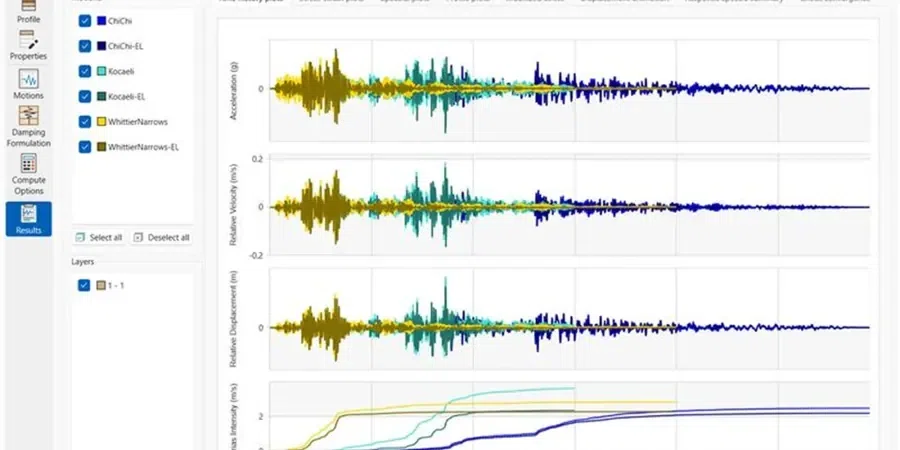
The local geology of Bendigo plays a decisive role in seismic response. Much of the urban area is underlain by variably weathered Ordovician sandstones and shales, often mantled by alluvial and colluvial deposits of clay, silt, and sand. These softer surficial materials can amplify ground motions and, in saturated zones, may be susceptible to strength loss. A thorough seismic amplification analysis quantifies how these deposits modify bedrock shaking, informing appropriate structural design spectra.
Australian seismic design is governed by AS 1170.4:2007 (R2018), which mandates site classification based on subsurface shear wave velocity profiles. In Bendigo, where shallow rock is common, sites often fall into Class B or C, but deeper weathering profiles can push classifications to Class D or E, requiring detailed investigation. Soil liquefaction analysis becomes essential where loose, saturated sandy layers exist within the top 10 to 15 metres, particularly along creek lines and paleochannels of the Bendigo Creek and its tributaries.
Projects requiring these assessments range from low-rise commercial buildings and residential subdivisions to critical infrastructure like hospitals, bridges, and emergency response facilities. For larger precinct-scale developments, a seismic microzonation study provides a spatial map of hazard parameters, guiding land-use planning and foundation design across variable terrain. This is particularly relevant for Bendigo's expanding northern growth corridors, where complex regolith profiles demand a nuanced understanding of ground behaviour under cyclic loading.
Bendigo experiences moderate intraplate seismicity, with historical events exceeding magnitude 5. Local soft soils and weathered rock can amplify ground motions significantly, and AS 1170.4 requires site-specific analysis to determine appropriate design parameters, ensuring structures perform safely under expected earthquake loads.
AS 1170.4:2007 (R2018) 'Structural design actions – Earthquake actions in Australia' governs seismic design. It defines site classes based on shear wave velocity and soil depth, ranging from Class A (strong rock) to Class E (very soft soils), directly influencing the seismic coefficient used in structural design.
Microzonation is typically required for large-scale developments, precinct planning, or municipal risk assessments where ground conditions vary significantly across the site. It maps spatial variations in amplification, liquefaction potential, and spectral response, supporting informed land-use decisions and targeted foundation design.
The primary risks include cyclic soil softening, liquefaction in saturated sandy alluvium, and amplified shaking in deeper weathered profiles. These conditions can lead to excessive settlement, bearing capacity loss, and lateral spreading, particularly along paleochannels and floodplains of the Bendigo Creek system.